 Image 1 of 3
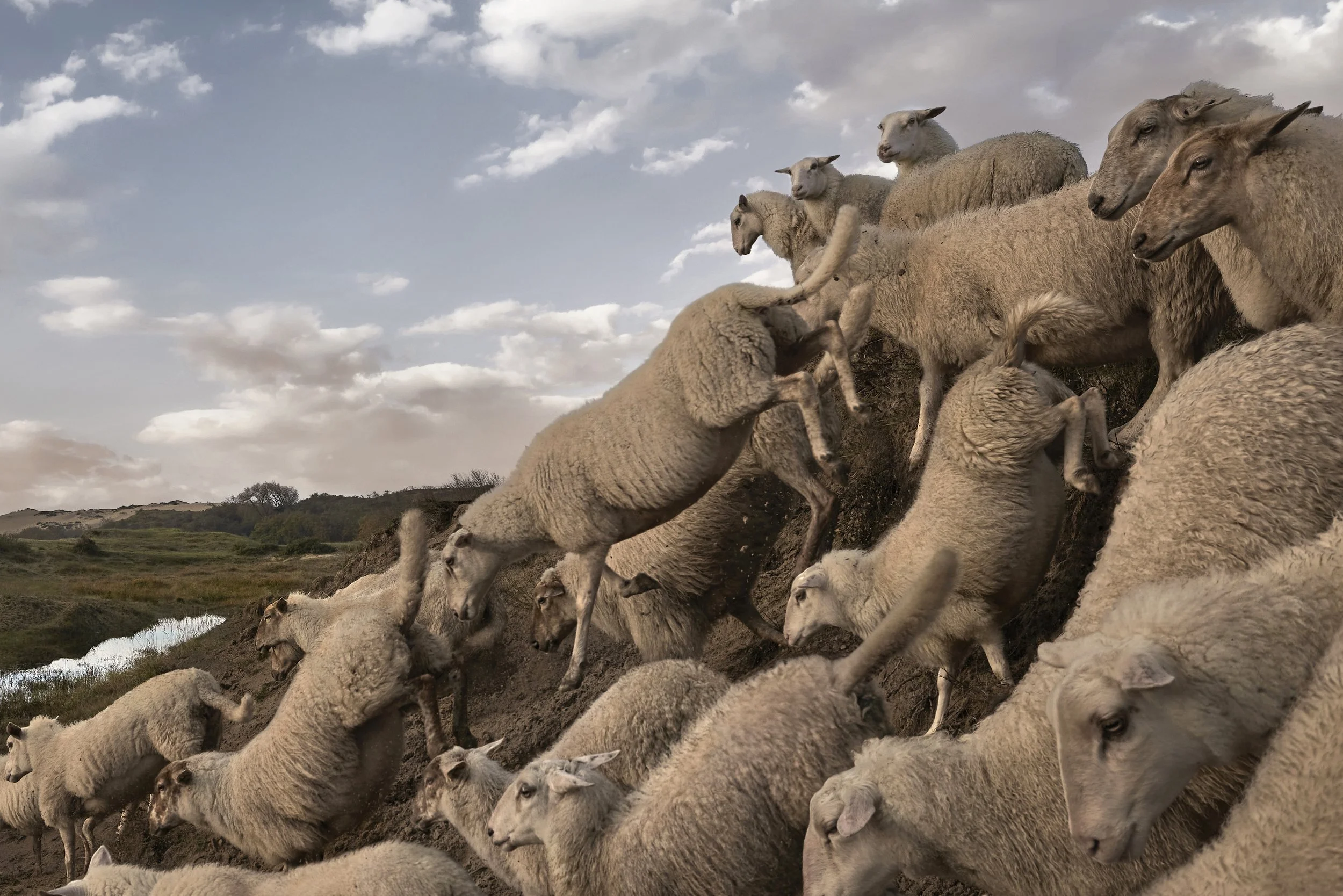 Image 2 of 3
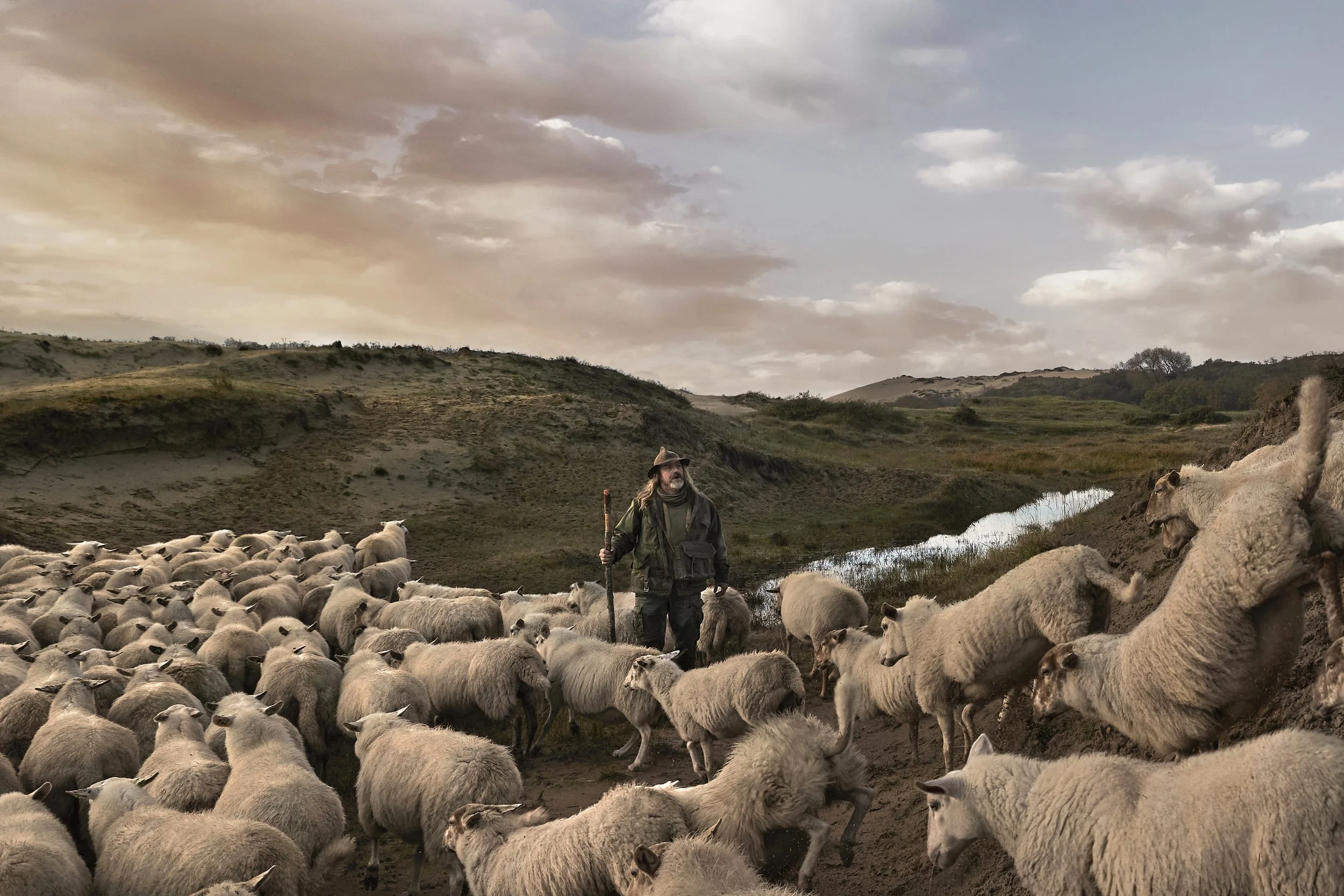 Image 3 of 3
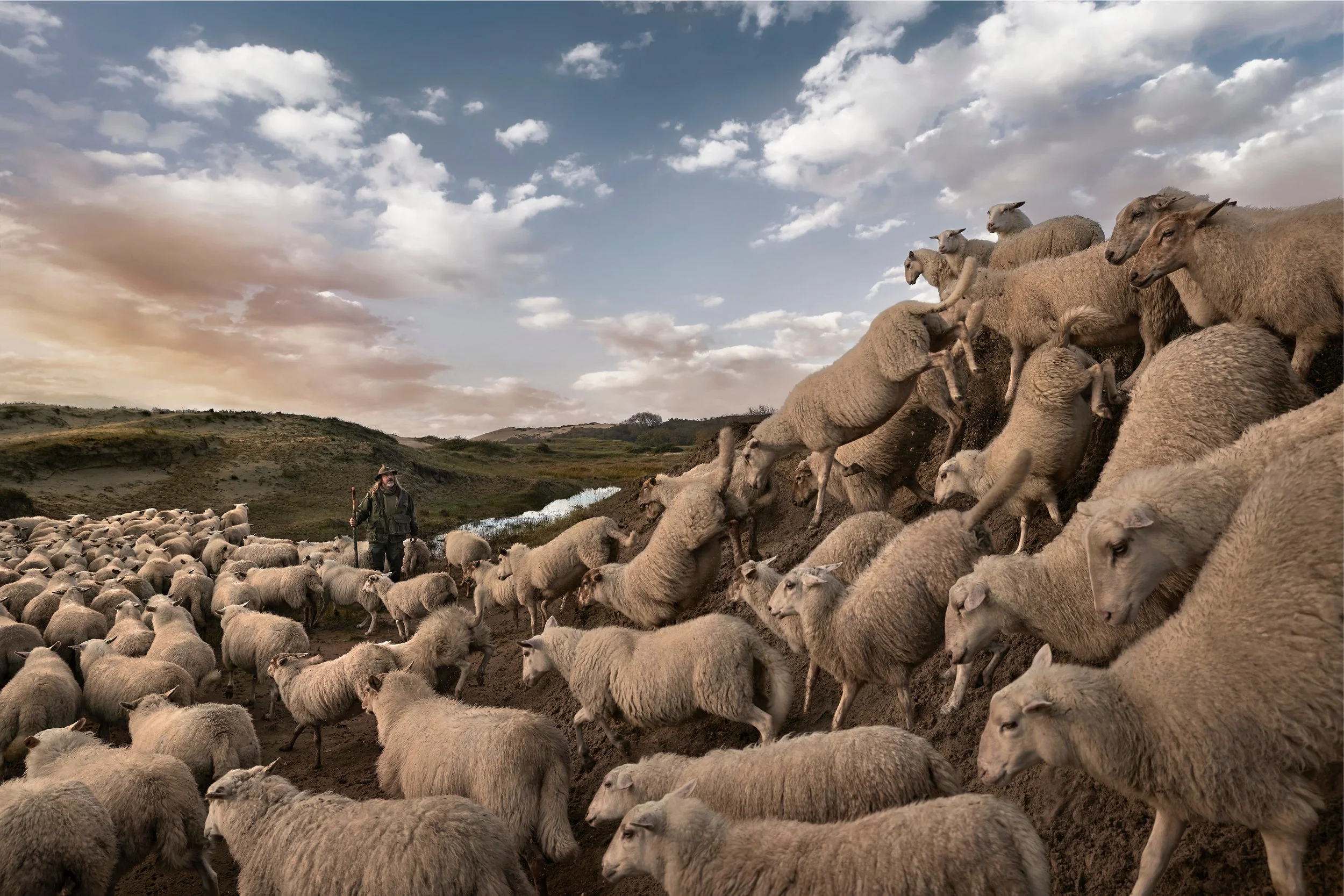
The charging flock of sheep belonging to shepherd Thomas van de Meij, moving through the Dutch Kennemerland nature reserve. This scene is a work from the art book Forgotten Heroes, in which Ezra Böhm documented 17 traditional crafts across the Netherlands. This image appears in the chapter Shepherd.
About the print
Printed on Hahnemühle Photo Rag Baryta fine art paper and framed in collaboration with the renowned artisan G&G Framing Atelier, using a thick, handmade dark-brown wooden frame. The print is float-mounted for added depth and a unique finish. The entire piece is protected behind museum glass.
The work is produced in an edition of 12 + 2 AP and comes signed, numbered, and accompanied by a certificate of authenticity.
About this work
The typical Dutch moorland landscapes are world famous and are on the list of World Heritage Sites. These landscapes were created in the Middle Ages by the intensive grazing of sheep on cleared land. This ancient method is still practiced in the same way today, so the characteristics of these fields have not changed.
The grazing generates an explosion of biodiversity in which each plant and animal species has its own natural place. “If we stop our work, within a few years it will become completely dense here, and that will be at the expense of many unique plant and animal species.” Fewer plant and animal species mean a greater risk of pests, diseases, and nuisances.
Nature in the Netherlands is not wild but largely cultivated so we must keep it balanced ourselves. Of all the biodiversity originally present in the Netherlands, only 18% remains today. We must bevery careful with that.
The charging flock of sheep belonging to shepherd Thomas van de Meij, moving through the Dutch Kennemerland nature reserve. This scene is a work from the art book Forgotten Heroes, in which Ezra Böhm documented 17 traditional crafts across the Netherlands. This image appears in the chapter Shepherd.
About the print
Printed on Hahnemühle Photo Rag Baryta fine art paper and framed in collaboration with the renowned artisan G&G Framing Atelier, using a thick, handmade dark-brown wooden frame. The print is float-mounted for added depth and a unique finish. The entire piece is protected behind museum glass.
The work is produced in an edition of 12 + 2 AP and comes signed, numbered, and accompanied by a certificate of authenticity.
About this work
The typical Dutch moorland landscapes are world famous and are on the list of World Heritage Sites. These landscapes were created in the Middle Ages by the intensive grazing of sheep on cleared land. This ancient method is still practiced in the same way today, so the characteristics of these fields have not changed.
The grazing generates an explosion of biodiversity in which each plant and animal species has its own natural place. “If we stop our work, within a few years it will become completely dense here, and that will be at the expense of many unique plant and animal species.” Fewer plant and animal species mean a greater risk of pests, diseases, and nuisances.
Nature in the Netherlands is not wild but largely cultivated so we must keep it balanced ourselves. Of all the biodiversity originally present in the Netherlands, only 18% remains today. We must bevery careful with that.